Most older adults want to keep living in their own homes. A few practical changes can make that safer, especially when it comes to falls, the leading cause of injury among adults 65 and older in the United States. Use this checklist on your next visit.
Entrances and stairs
- Bright lighting at the door and on every stair, with switches at the top and bottom.
- Sturdy handrails on both sides of staircases.
- Non-slip treads or contrasting tape on step edges.
- A place to sit and set down bags near the door.
Living areas and hallways
- Clear walking paths with no cords, clutter or low furniture in the way.
- Remove loose rugs or secure them with non-slip backing.
- Chairs with armrests at a comfortable height for standing up.
- Night lights between the bedroom and the bathroom.
Bathroom
- Grab bars by the toilet and in the shower or tub (towel bars are not strong enough).
- Non-slip mats inside and outside the shower.
- A shower chair and a handheld shower head.
- A raised toilet seat if standing up is difficult.
Kitchen
- Everyday items moved to shelves between waist and shoulder height.
- No step stools; if one is truly needed, a stable one with a handle.
- A kettle and stove with automatic shut-off where possible.
- Working smoke and carbon monoxide detectors nearby.
Bedroom
- A lamp or touch light within reach of the bed.
- A phone or medical alert device reachable from bed.
- A bed at a height that allows feet flat on the floor when sitting.
Beyond the home
- A yearly vision check and a review of medications that might cause dizziness.
- Regular activity to maintain strength and balance; ask a doctor about programs.
- Well-fitting, non-slip shoes indoors, rather than socks or loose slippers.
Where a caregiver helps
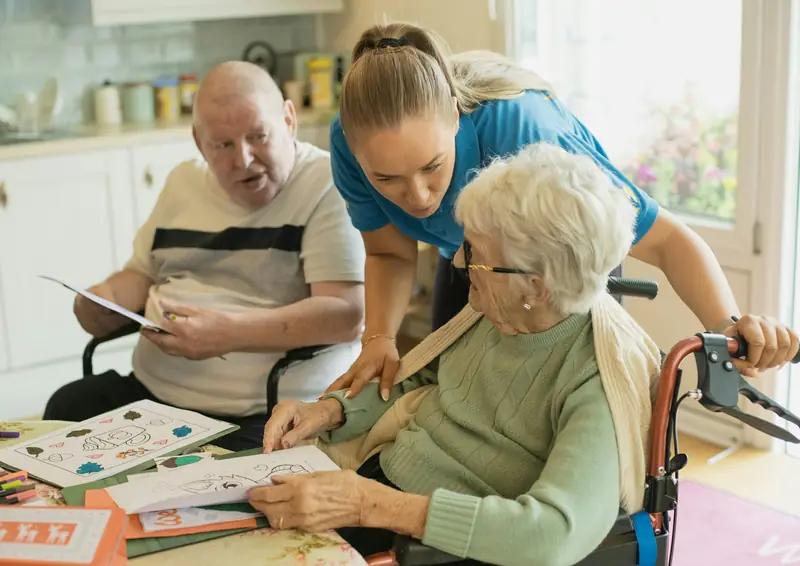
A caregiver can keep walkways clear, help with bathing and stairs, and notice risks before they become accidents. Light housekeeping and personal care are often the first services families add.
Sources: Centers for Disease Control and Prevention, STEADI "Check for Safety" brochure; National Institute on Aging, "Fall-Proofing Your Home".
This article is general information for families and caregivers. It is not medical, legal or financial advice. For decisions about health, benefits or employment, speak with a qualified professional.